
Private Label Hot & Cold Gel Pads: A Buyer's Guide to OEM Gel Pack Manufacturing
Short answer: A private label hot & cold gel pack is a reusable gel pack — frozen for cold therapy or heated for warm therapy — sold under your brand with your artwork and packaging. For buyers, the decisions that matter are gel performance (it must stay flexible when frozen), film and seal quality (leaks are the number one failure), size and shape range, and how much of the pack and packaging can be customized. At Moda Summer, gel products are made in Dongguan, China, with 20+ years of gel manufacturing experience, 400+ existing molds, an in-house laboratory and a dedicated QC team, and packs can be customized in size, shape, thickness, structure and packaging.
Who buys private label gel packs
- Sports medicine and recovery brands selling cold packs, wraps and sleeves under their own label.
- First aid and home healthcare brands adding reusable hot/cold packs to an existing range.
- Equestrian and veterinary brands — leg wraps and boots for horses use the same gel technology in larger, shaped formats.
- Retailers and e-commerce sellers who need a ready product line with their own packaging.
The five things to confirm before ordering
1. Gel flexibility when frozen
A gel pack that freezes into a hard brick cannot follow a knee, shoulder or ankle, and users feel the difference immediately. Ask how the gel behaves at freezer temperature and test it on the body part the pack is designed for. Flexibility when frozen is the single clearest quality signal in this category.
2. Film and seal quality
Most gel pack failures are leaks, and most leaks start at the seal. Confirm the film type and thickness, how the edges are sealed, and what leak or pressure testing is done before packing. A pack that survives drop and squeeze testing in the factory saves returns later.
3. Size, shape and fill weight
Standard rectangles serve general use, but the profitable formats are shaped: contoured packs for shoulders and backs, long packs for wraps and sleeves, and large shaped panels for equine legs. With 400+ existing molds, Moda Summer can usually match a target format without new tooling; custom sizes, shapes and fill weights are confirmed at the quotation stage.
4. Hot and cold performance
A dual-use pack must tolerate both the freezer and heating (hot water or microwave, per the product's instructions). Confirm the temperature range the gel and film are rated for, and that the usage instructions printed on the pack or box match how your market actually uses the product.
5. Customization scope
Private label means more than a logo. Confirm:
- Printing on the pack itself (brand, instructions, warnings)
- Retail box or pouch design with your artwork
- Insert cards and instruction leaflets in your language
- Pack sizes and case quantities for your channel
How an OEM gel pack order runs
- Confirm the format — size, shape, fill weight and whether the pack is sold alone or inside a wrap or sleeve.
- Approve a physical unit — freeze it, heat it, bend it, and check the print against your artwork.
- Freeze the packaging artwork — box, inserts and on-pack printing confirmed before production.
- Production with QC — seal and leak checks during production, print checked against the approved unit, packing completeness checked per case.
- Ship and reorder — keep the approved unit as the reference for repeat orders, so batch two matches batch one.
FAQ
What is the difference between a gel pack and a gel insert?
A gel pack is the finished, sealed product a consumer uses. A gel insert is the same sealed gel element made to sit inside a wrap, sleeve or brace — brands that sell wraps often buy inserts and assemble the final product themselves.
Can one pack be used for both hot and cold therapy?
Yes. Reusable gel packs are designed to be frozen for cold therapy and heated for warm therapy. The film and gel must be rated for both, which is one of the checks in the list above.
Can gel packs be made in custom shapes?
Yes. Size, shape, thickness, structure and packaging are all customizable, and an existing mold library of 400+ shapes covers most common formats without new tooling.
What should I check on a pre-production unit?
Freeze flexibility, seal strength, leak resistance, heating tolerance, and print quality — in that order.
Bottom line
Private label gel packs succeed or fail on gel flexibility and seal quality, not on artwork. Choose the format from an existing mold where possible, approve a physical unit after a freeze test, and freeze the packaging before production. Browse the Hot&Cold range or contact us with your target size and shape to start.
At a glance: gel pack formats compared
| Format | What it is | Typical buyers | Customization focus |
|---|---|---|---|
| Standalone gel pack | The sealed pack used directly on the body | First aid and home healthcare brands | On-pack printing, retail box, size range |
| Gel insert | The gel element placed inside a wrap, sleeve or brace | Sports medicine and rehab brands | Shape matched to the garment |
| Gel wrap or sleeve | A pack integrated into a wearable wrap | Recovery and equine brands | Fit, straps, coverage area |
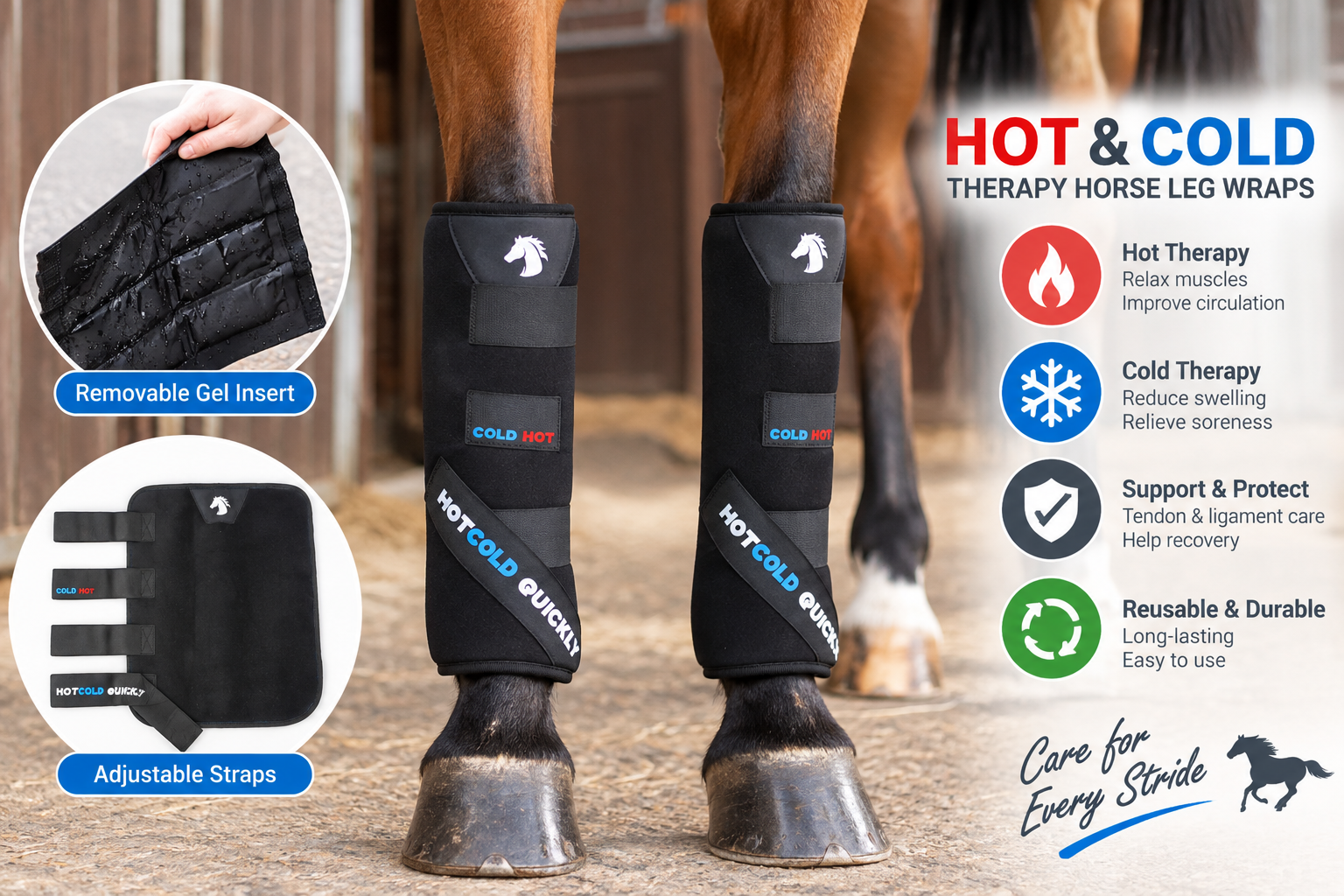 Why Hot & Cold Therapy Is Becoming Part of Everyday Horse Leg Care
